
- What Is a Tummy Tuck After Pregnancy?
- Why Pregnancy Often Leads to Tummy Tuck Surgery?
- Who Is a Good Candidate for a Tummy Tuck?
- Types of Tummy Tuck Procedures
- What is Tummy Tuck Cost After Pregnancy?
- Tummy Tuck Scar: What to Expect
- Tummy Tuck Recovery Time
- Before and After Tummy Tuck Results
- Why Choose The Gallery of Cosmetic Surgery?
- Conclusion
- FAQs
Pregnancy transforms the body in remarkable ways, but many women find that their abdomen never quite returns to its pre-pregnancy state. The abdominal wall stretches significantly to accommodate a growing baby, and after delivery, issues like loose skin, separated muscles, and a stubborn lower belly pouch often remain. These changes can persist even with consistent diet and exercise.
For mothers in the Pacific Northwest, restoring a firmer, flatter midsection has become a top cosmetic priority. That is why many women explore options for a tummy tuck Kirkland or tummy tuck Bellevue residents trust. At The Gallery of Cosmetic Surgery, board-certified surgeons Dr. Craig Jonov and Dr. Rajasekhar Nalluri specializes in post-pregnancy abdominoplasty (Tummy Tuck surgery), helping patients achieve natural-looking results with personalized surgical plans for tzummy tuck Bellevue patients.
What Is a Tummy Tuck After Pregnancy?
A tummy tuck surgery, medically known as abdominoplasty, is a surgical procedure that removes excess skin and fat from the abdomen while tightening the underlying muscles. After pregnancy, this procedure restores a flatter, firmer midsection that diet and exercise alone cannot achieve.
The surgery addresses the structural changes that occur during pregnancy, including stretched skin, weakened abdominal muscles, and pockets of resistant fat. The result is a smoother, more contoured abdominal profile that complements the rest of the body.
Why Pregnancy Often Leads to Tummy Tuck Surgery?
Pregnancy creates several abdominal concerns that lead women to consider surgery:
- Diastasis recti: Separation of the abdominal muscles down the midline, causing a persistent bulge.
- Loose or hanging skin: Skin that has lost elasticity after stretching during pregnancy.
- Stretch marks: Permanent marks on the lower abdomen that often resist topical treatments.
- Stubborn fat: Lower belly fat that remains despite weight loss efforts.
These changes are structural, which is why diet and exercise often fall short. A tummy tuck physically corrects what the body cannot repair on its own.
Who Is a Good Candidate for a Tummy Tuck?
Ideal candidates for post-pregnancy abdominoplasty typically meet the following criteria:
- Finished having children, since future pregnancies can reverse results
- At or near a stable goal weight
- In good overall health with no uncontrolled medical conditions
- Non-smoker or willing to quit before and after surgery
- Holds realistic expectations about outcomes
Women searching for a tummy tuck Bellevue or tummy tuck Kirkland consultation should schedule an evaluation to determine candidacy and discuss personalized options.
Types of Tummy Tuck Procedures
The Gallery of Cosmetic Surgery offers several tummy tuck options for different abdominal concerns. During a consultation, the surgical team evaluates skin laxity, muscle separation, fat distribution, scar placement goals, and post-pregnancy changes to recommend the most suitable approach.
Mini Tummy Tuck
A mini tummy tuck focuses on the lower abdomen below the belly button. It is usually best for patients with mild loose skin or a small lower belly pouch. The incision is typically shorter than a full tummy tuck, and recovery may be easier for the right candidate.
Extended Tummy Tuck
An extended tummy tuck addresses loose skin and contour concerns that extend beyond the front of the abdomen toward the hips or flanks. This option may be helpful after pregnancy, major weight loss, or body changes that leave excess skin around the lower torso. It can create a smoother abdominal shape and more defined waistline.
Fleur De Lis Tummy Tuck
A fleur de lis tummy tuck is designed for patients with significant skin laxity in both vertical and horizontal directions. Unlike a standard tummy tuck, this technique removes excess skin through a lower abdominal incision and a vertical incision. At The Gallery, Dr. Jonov & Dr. Nalluri both specialize in body procedures including fleur de lis tummy tucks.
Reverse Tummy Tuck
A reverse tummy tuck treats loose skin mainly in the upper abdomen. The incision is placed near the breast crease, allowing the surgeon to remove excess upper abdominal skin. The Gallery explains that this option is less common than mini or extended tummy tuck surgery and is often used when sagging affects the upper abdomen more than the lower abdomen.
What is Tummy Tuck Cost After Pregnancy?
Tummy tuck cost after pregnancy depends on several factors, such as:
- Procedure type
- Surgeon experience
- Facility fees
- Anesthesia fees
- Amount of correction needed
- Whether liposuction is included
According to ASPS, the average cost of tummy tuck in the U.S is $8,174. However the Gallery of Cosmetic Surgery offers a mini tuck starting at $6,995. A thorough consultation with the surgeon might provide the most accurate quote based on anatomy, goals, and surgical plan.
Tummy Tuck Scar: What to Expect
A tummy tuck scar is usually placed low on the abdomen, often near the bikini or underwear line. Surgeons typically plan the incision so it can be hidden under many clothing styles.
Scar appearance depends on:
- Incision length
- Procedure type
- Skin quality
- Genetics
- Scar care
- Sun protection
- Healing response
Most scars look more noticeable early in recovery, then gradually fade over several months. Proper scar care, avoiding smoking, following post-operative instructions, and protecting the scar from sun exposure can help support better healing.
Tummy Tuck Recovery Time
Tummy tuck recovery time varies by procedure type and patient healing rate. Most patients should expect a staged recovery.
First Week
The first week usually involves swelling, tightness, bruising, and limited movement. Patients may walk slightly bent forward to avoid tension on the incision.
1 to 2 Weeks
Light walking is encouraged, but strenuous activity is avoided. Some patients may return to desk work during this period depending on comfort and surgeon approval.
4 to 6 Weeks
Many patients gradually return to more normal routines. Exercise, lifting, and core activity should only resume when cleared by the surgeon.
Several Months
Swelling continues to improve. Final contour becomes more visible as tissues settle and scars mature.
Before and After Tummy Tuck Results
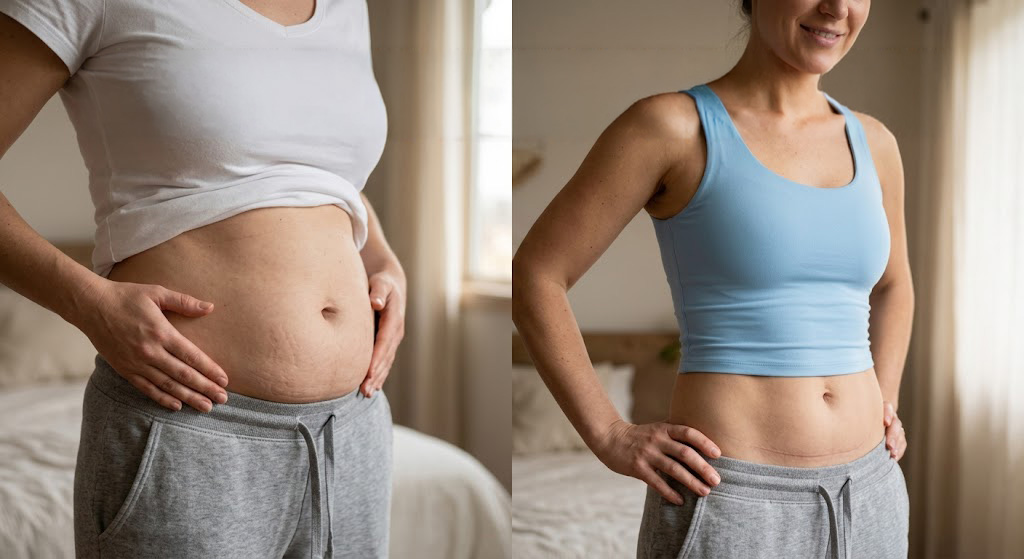
Before and after tummy tuck results often show a flatter abdomen, smoother lower belly, improved waist contour, and a firmer midsection. Results are not instant. Swelling, scar healing, and tissue settling all take time.
Common improvements may include:
- Flatter stomach
- Reduced loose skin
- Improved lower belly shape
- Better waist definition
- Stronger core appearance
- Smoother clothing fit
Realistic expectations are important. A tummy tuck can improve abdominal contour, but it does not replace weight loss or stop future aging.
Why Choose The Gallery of Cosmetic Surgery?
The Gallery of Cosmetic Surgery serves patients from Bellevue, Kirkland, and nearby areas. The clinic offers personalized body contouring plans with accredited surgical facilities, and board certified surgeons like Dr. Jonov & Dr. Nalluri for tummy tuck and related procedures.
Dr. Craig Jonov is an experienced cosmetic surgeon known for performing body contouring procedures, including tummy tuck surgery, Mommy Makeover surgery, liposuction, and breast procedures.
Dr. Rajasekhar Nalluri is a board-certified plastic surgeon with extensive experience in cosmetic and reconstructive surgery. His background supports a surgical approach focused on safety, natural-looking contours, and individualized treatment planning.
Conclusion
A tummy tuck after pregnancy can help address loose skin, stretched abdominal muscles, and stubborn lower belly changes that may remain after childbirth. For patients looking for tummy tuck in Kirkland and tummy tuck in Bellevue options, The Gallery of Cosmetic Surgery provides individualized consultations with Dr. Jonov and Dr. Nalluri. To learn about pricing, recovery, scars, and personalized procedure options, contact The Gallery of Cosmetic Surgery to schedule a tummy tuck consultation.
FAQs
How long should someone wait after pregnancy for a tummy tuck?
Most patients wait until the body has healed from childbirth, weight is stable, and breastfeeding is complete. Many surgeons recommend waiting at least 6 months after pregnancy, though the best timing depends on health, recovery, and personal goals.
Can someone get pregnant after a tummy tuck?
Pregnancy after a tummy tuck is possible, but it may stretch the abdominal skin and muscles again. For longer-lasting results, many patients choose tummy tuck surgery after they are finished having children.
How painful is tummy tuck recovery?
Tummy tuck recovery usually feels tight, sore, and uncomfortable during the first several days. Pain is typically managed with prescribed medication and post-operative instructions. Discomfort usually improves gradually as swelling decreases.
Will a tummy tuck remove stretch marks?
A tummy tuck may remove stretch marks located on the lower abdominal skin that is surgically removed. Stretch marks above the belly button or outside the treated area may remain, although the skin may look smoother after tightening.
How long do tummy tuck results last?
Tummy tuck results can last for many years when weight remains stable and healthy habits are maintained. Aging, weight changes, and future pregnancy can affect the abdomen over time.
